
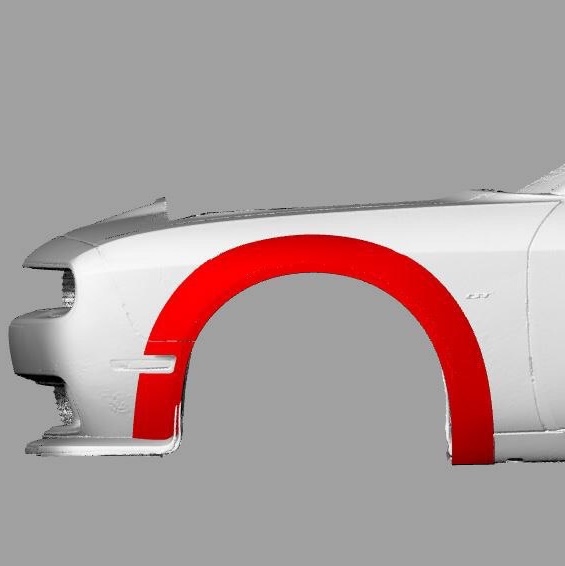
Dodge Challenger Wide Body Kit Production – 3D Scanning, CNC & ABS Forming
in 3D Scanning, CNC Milling, Manufacturing on December 18, 2025Dodge Challenger Wide Body Kit Production: From 3D Scanning to ABS Thermoforming
Introduction
The Dodge Challenger is a modern muscle car with aggressive proportions and strong visual identity. Creating a wide body kit for the Dodge Challenger requires extreme precision, engineering accuracy, and a well-structured production workflow. From digital measurements to final ABS plastic parts, every stage plays a critical role in achieving perfect fitment and durability.
In this article, we explain the full production process of a Dodge Challenger wide body kit, including 3D scanning, engineering development, CNC machining of MDF molds, and ABS plastic thermo vacuum forming.
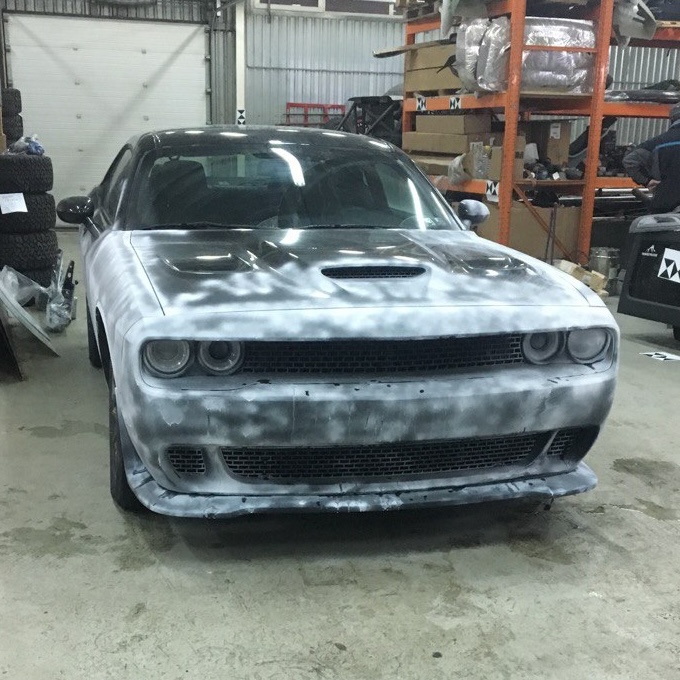
Stage 1: 3D Scanning of the Dodge Challenger
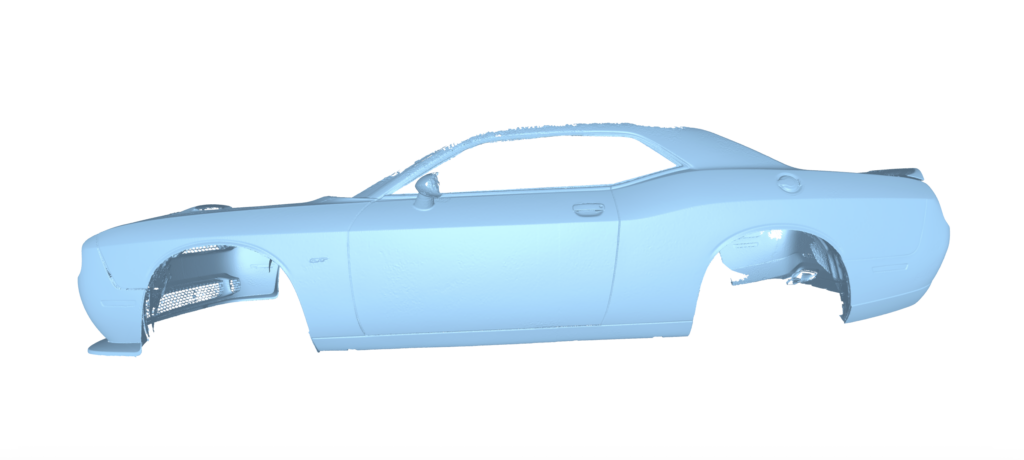
The production process begins with high-precision 3D scanning of the vehicle exterior. Using professional structured-light or laser scanners, the entire body of the Dodge Challenger is digitized.
Why 3D scanning is critical
- Captures exact geometry of fenders, doors, bumpers, and quarter panels
- Eliminates manual measurement errors
- Creates a digital twin for engineering and design
- Ensures perfect fitment of wide body components
The result is a detailed 3D mesh (STL / OBJ / PLY) that accurately represents the Challenger’s body lines.
Stage 2: Engineering and CAD Development
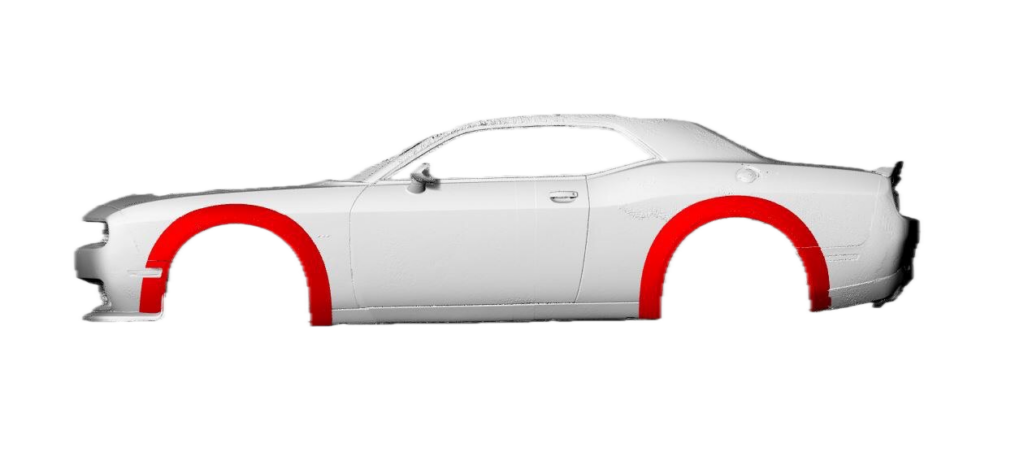
Once the 3D scan is complete, engineers begin CAD modeling and design development.
Engineering tasks include
- Designing wide fender extensions
- Defining wheel clearance and tire fitment
- Optimizing mounting points
- Maintaining OEM body lines and proportions
- Reinforcing stress zones
- Preparing parts for manufacturing
CAD software allows engineers to test dimensions digitally, adjust geometry, and verify clearances before any physical production begins.
Stage 3: CNC Machining of MDF Molds
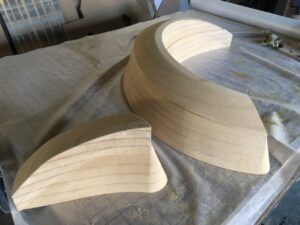
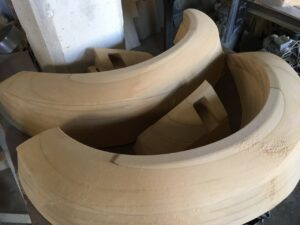
After engineering approval, the digital models are transferred to CNC machines for mold production.
CNC milling process
- Molds are machined from high-density MDF (Medium-Density Fiberboard)
- CNC routers ensure symmetrical and accurate shapes
- Surface finishing prepares the mold for forming
- Press molds are tested for dimensional accuracy
MDF is commonly used for thermoforming molds due to its stability, smooth surface, and cost efficiency during prototyping and small-to-medium production runs.
Stage 4: ABS Plastic Thermo Vacuum Forming
The final production stage is ABS plastic thermo vacuum forming, a proven method for manufacturing durable automotive body parts.
Thermoforming process
- ABS plastic sheets are heated to forming temperature
- Heated plastic is placed over the CNC-machined MDF mold
- Vacuum pressure pulls the material tightly onto the mold
- The part cools and retains its precise shape
- Excess material is trimmed and finished
Why ABS plastic is used
- High impact resistance
- Lightweight and flexible
- Resistant to temperature changes
- Ideal for daily-driven vehicles
- Easy to paint and finish
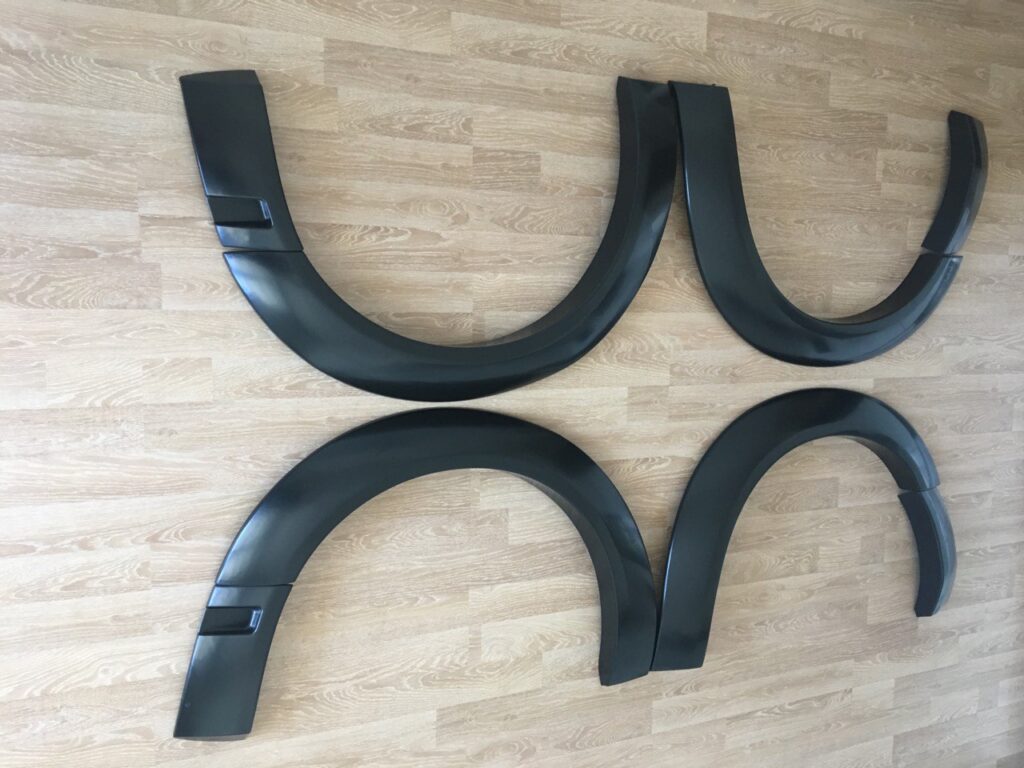
The result is a production-ready wide body kit with consistent quality and reliable fitment.
Quality Control and Fitment Testing
Each wide body kit component undergoes:
- Dimensional inspection
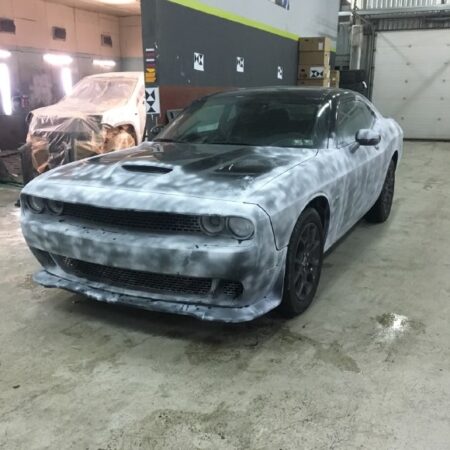
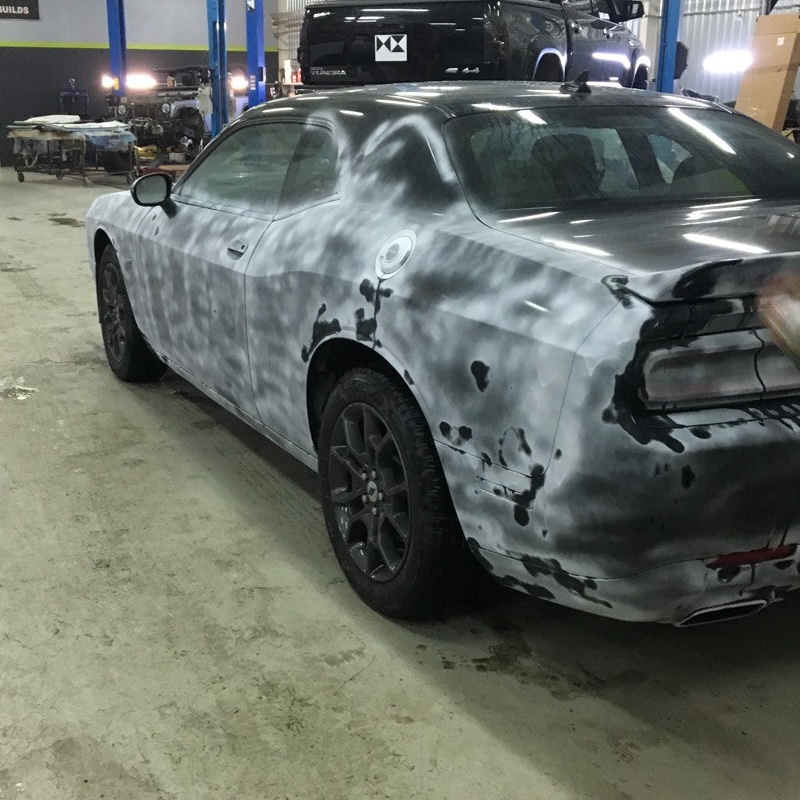
- Test fitting on the Dodge Challenger
- Edge and surface quality checks
- Mounting alignment verification
This ensures that every part meets both aesthetic and functional requirements.
Applications of Dodge Challenger Wide Body Kits
- Performance builds
- Track-focused vehicles
- Show cars
- Custom street builds
- Brand and concept projects
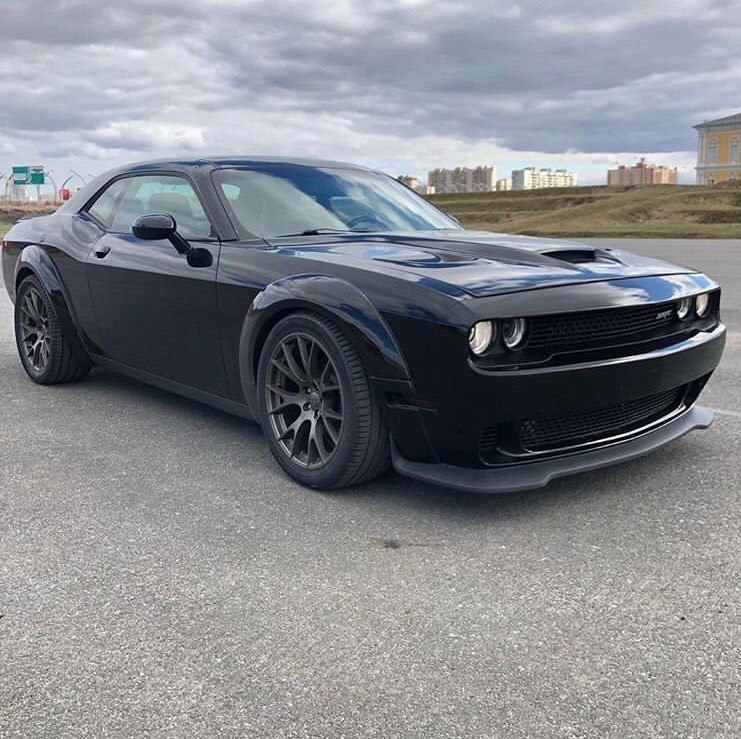
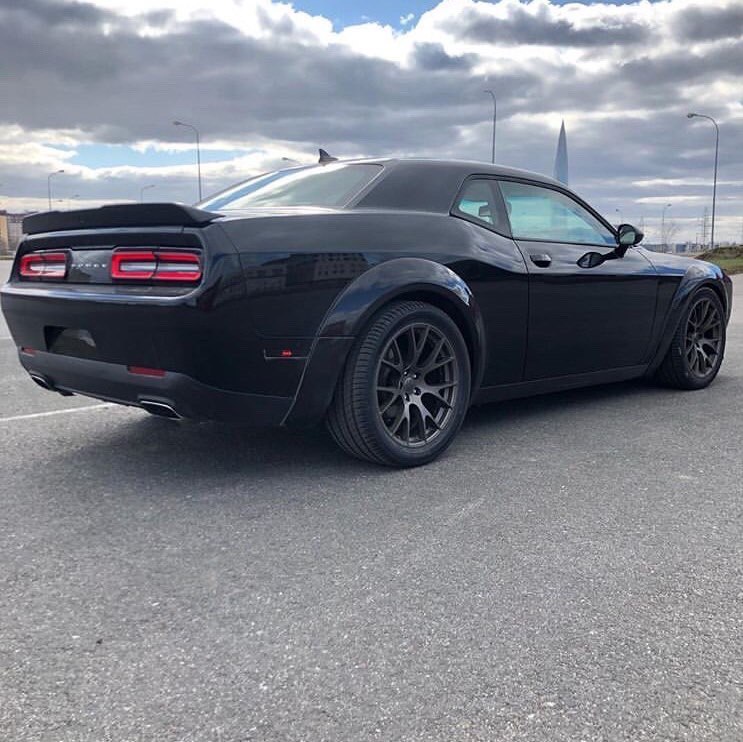
Wide body kits allow for wider wheels, improved stance, enhanced aerodynamics, and a unique visual presence.

Conclusion
The Dodge Challenger wide body kit production process combines advanced digital technologies with proven manufacturing methods. From 3D scanning and engineering design to CNC machining of MDF molds and ABS plastic thermo vacuum forming, each stage ensures precision, durability, and perfect fitment.
This workflow allows manufacturers to deliver high-quality wide body kits that transform the Dodge Challenger into an aggressive, performance-oriented machine while maintaining OEM-level accuracy.